Sagrada Família Photography: Inside Gaudí's Forest of Color
I never photograph churches. Twenty-five years behind a camera on the streets of Barcelona, and cathedrals have always been something I visit with my eyes, not my lens. I'm not religious, and when I travel I still walk into churches and cathedrals the way anyone does — out of curiosity, respect, sometimes just to sit somewhere quiet for a while. I rarely raise the camera inside them, and on the few occasions I have, those photographs never left my hard drive. This week that changed. I finally did a proper session of Sagrada Família photography, and I walked out unable to stop looking at what I'd captured.
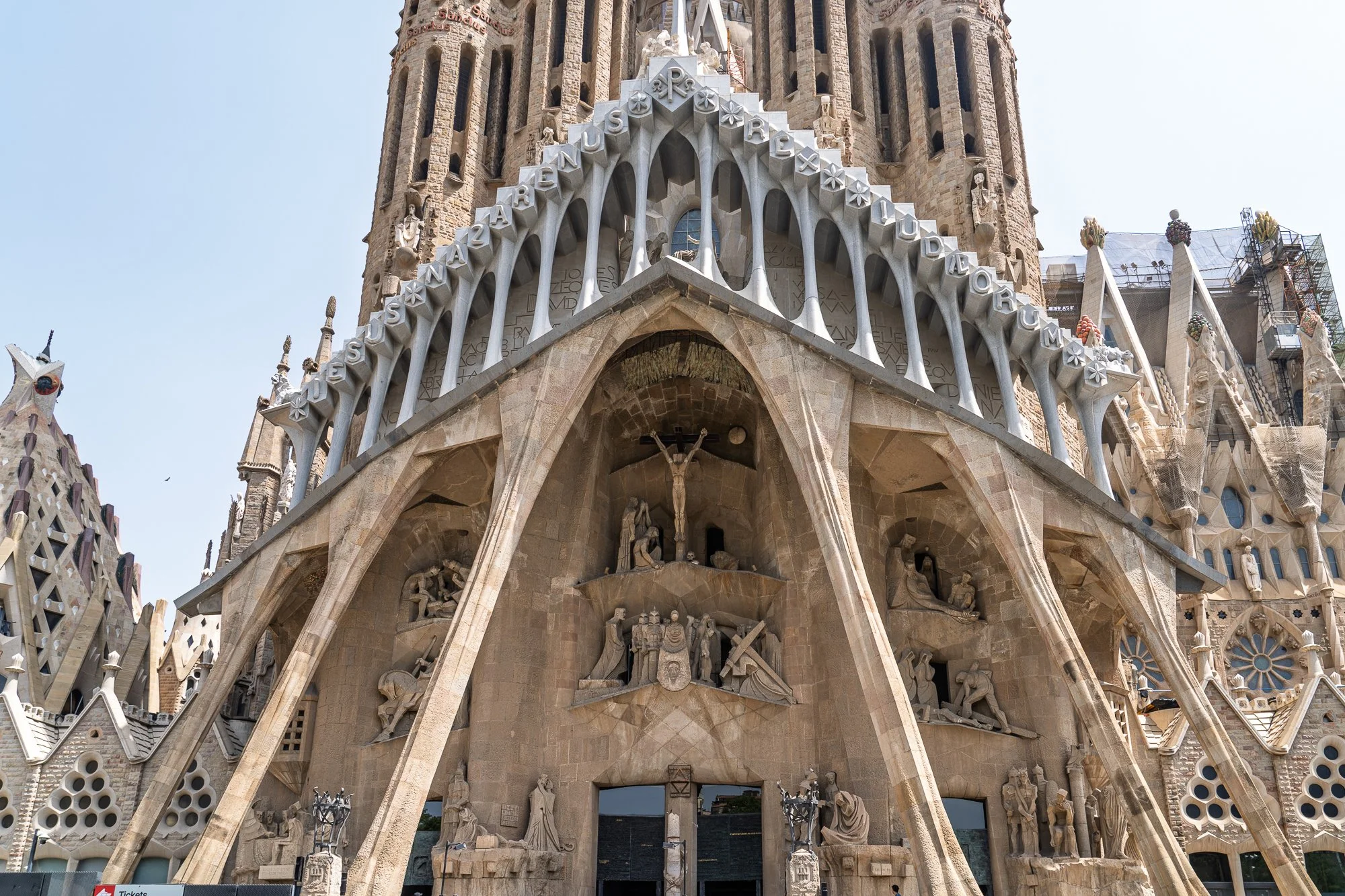
The Passion Facade, from the street — bCLPhoto
Why a Street Photographer Doesn't Shoot Churches (Until He Does)
I can already hear some of you asking what a street photographer is doing publishing photos from inside a basilica. Fair question. But any photographer will tell you the same thing: you carry the camera because you never know what you'll find, and when you find it, you photograph it. There's no holding back. Twenty-five years of walking Barcelona with a camera taught me that much, and it's part of what I try to explain on the About page — the eye doesn't switch off just because the subject changes.
What I saw inside the Sagrada Família made the decision for me. Tourists and worshippers of every background stood shoulder to shoulder, phones and cameras raised, all wearing the same expression — quiet disbelief. Watching that reaction repeated for two hours, I understood something I'd never quite grasped from photographs alone: why so many people build a Barcelona trip around this single building, and why people still speak of Antoni Gaudí as a genius rather than simply a good architect. You need to stand under it to believe it.
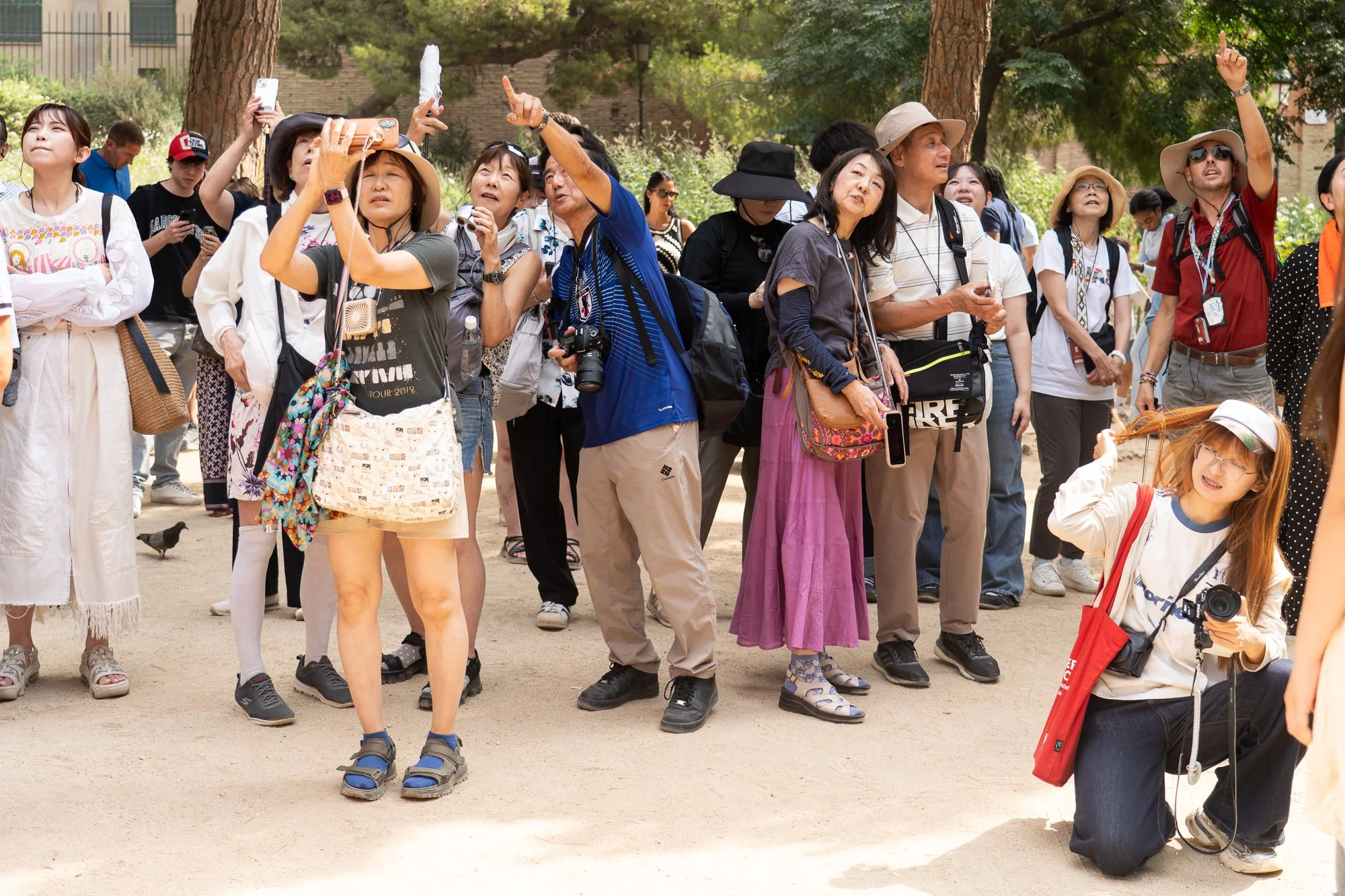
Everyone had the same expression — bCLPhoto
Sagrada Família Photography: A Forest of Color
Inside, the description I'd read somewhere finally made sense: people call the Sagrada Família a forest of color, and whoever coined that phrase wasn't exaggerating. The columns rise and split partway up, branching into the ceiling exactly the way a tree canopy opens above a forest path. Gaudí, as his biography makes clear, spent decades studying natural forms before translating them into stone at a scale that still feels improbable in person. The central tower, once finished, is planned to stand as the tallest church spire in the world — but you don't need that fact to feel small underneath it.
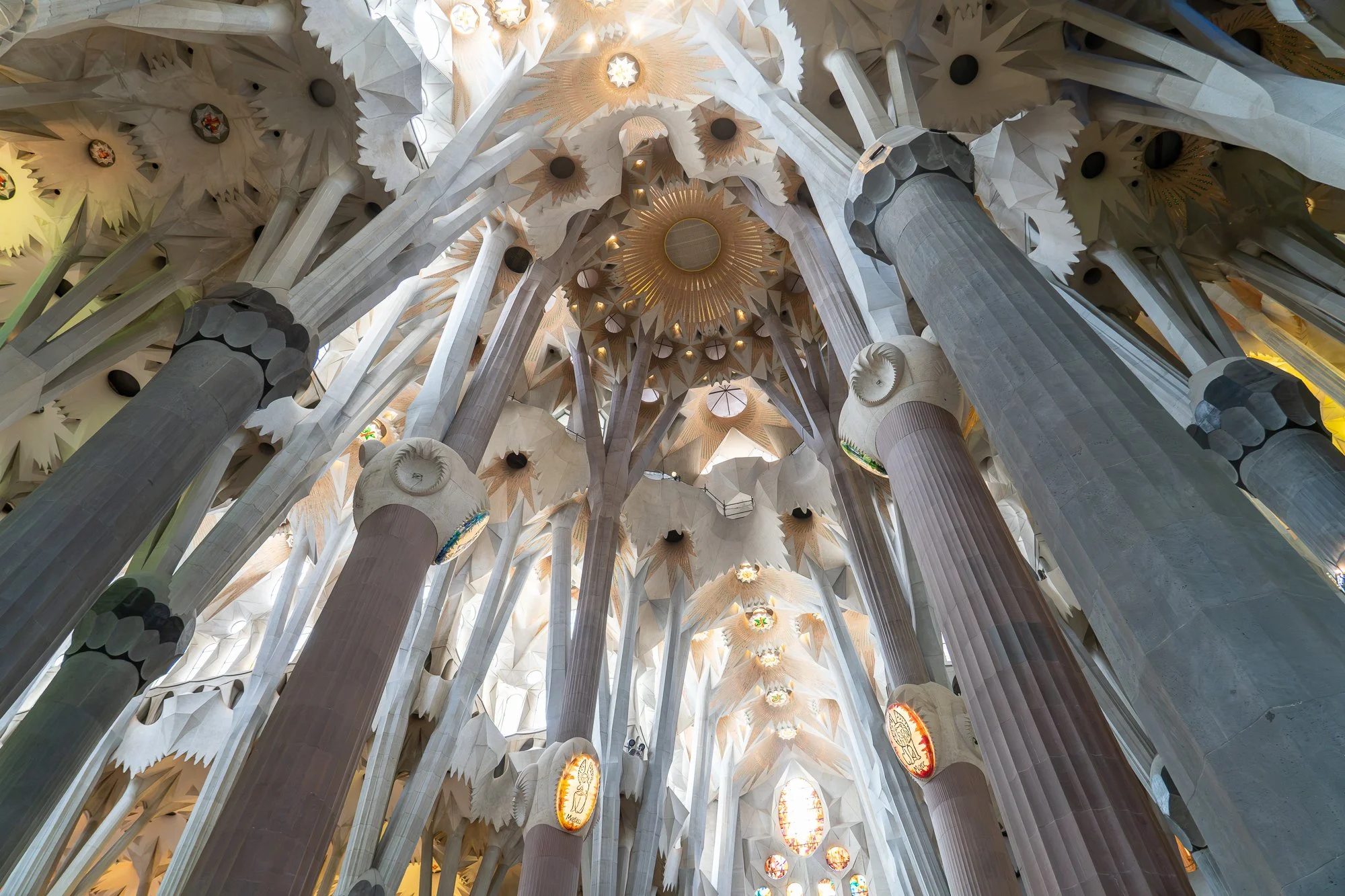
Where the columns become branches — bCLPhoto
Then there's the light. Stained glass runs floor to ceiling on both sides of the nave: cool blues and greens on one side, warm reds, oranges and yellows on the other, and the whole interior shifts as the sun moves. At around two in the afternoon, both palettes were firing at full strength, spilling across the columns and the floor in overlapping washes of color. That's the moment that convinced me this was worth photographing properly, forest metaphor and all.
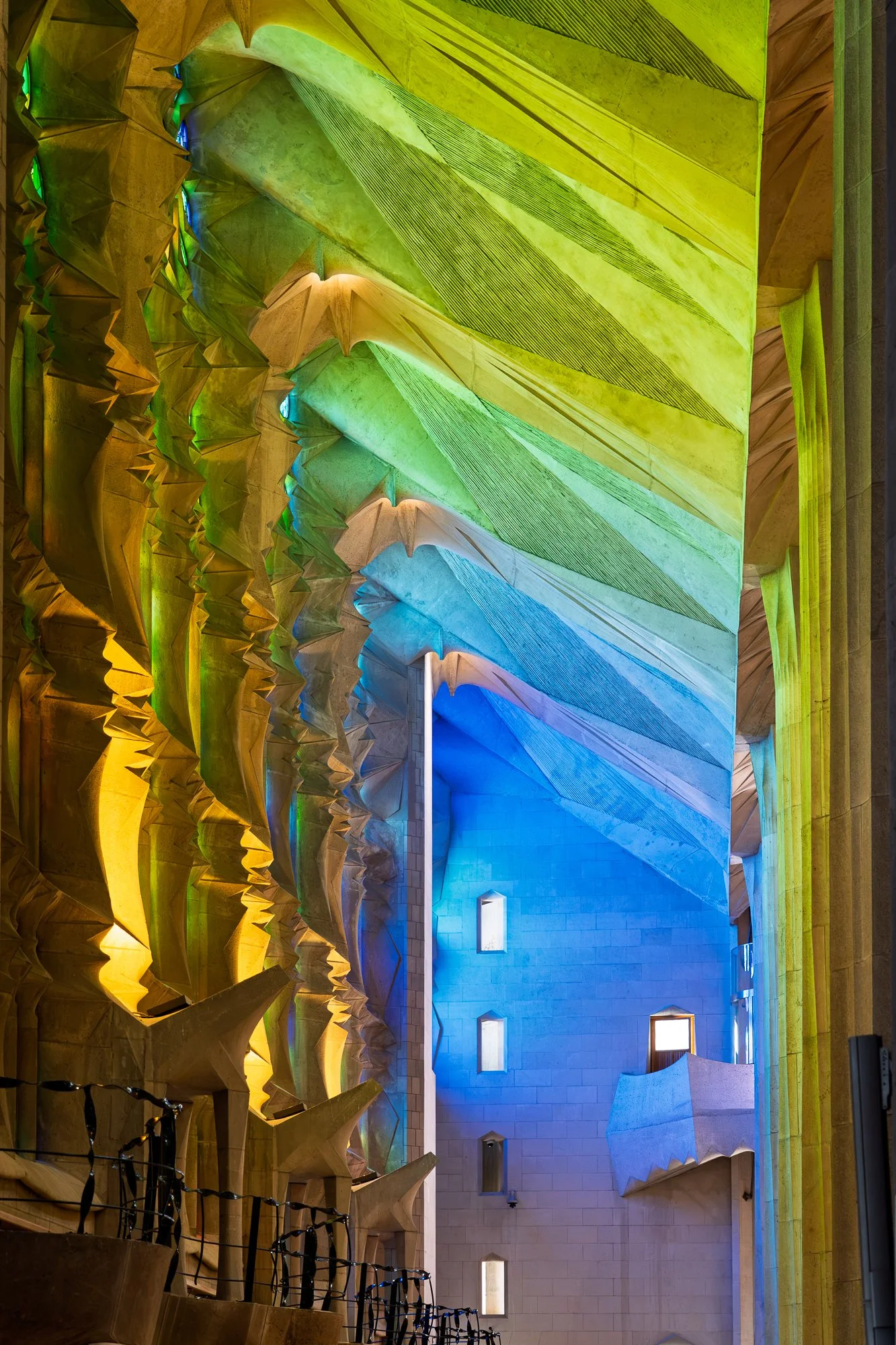
The forest of colors, around 2pm — bCLPhoto
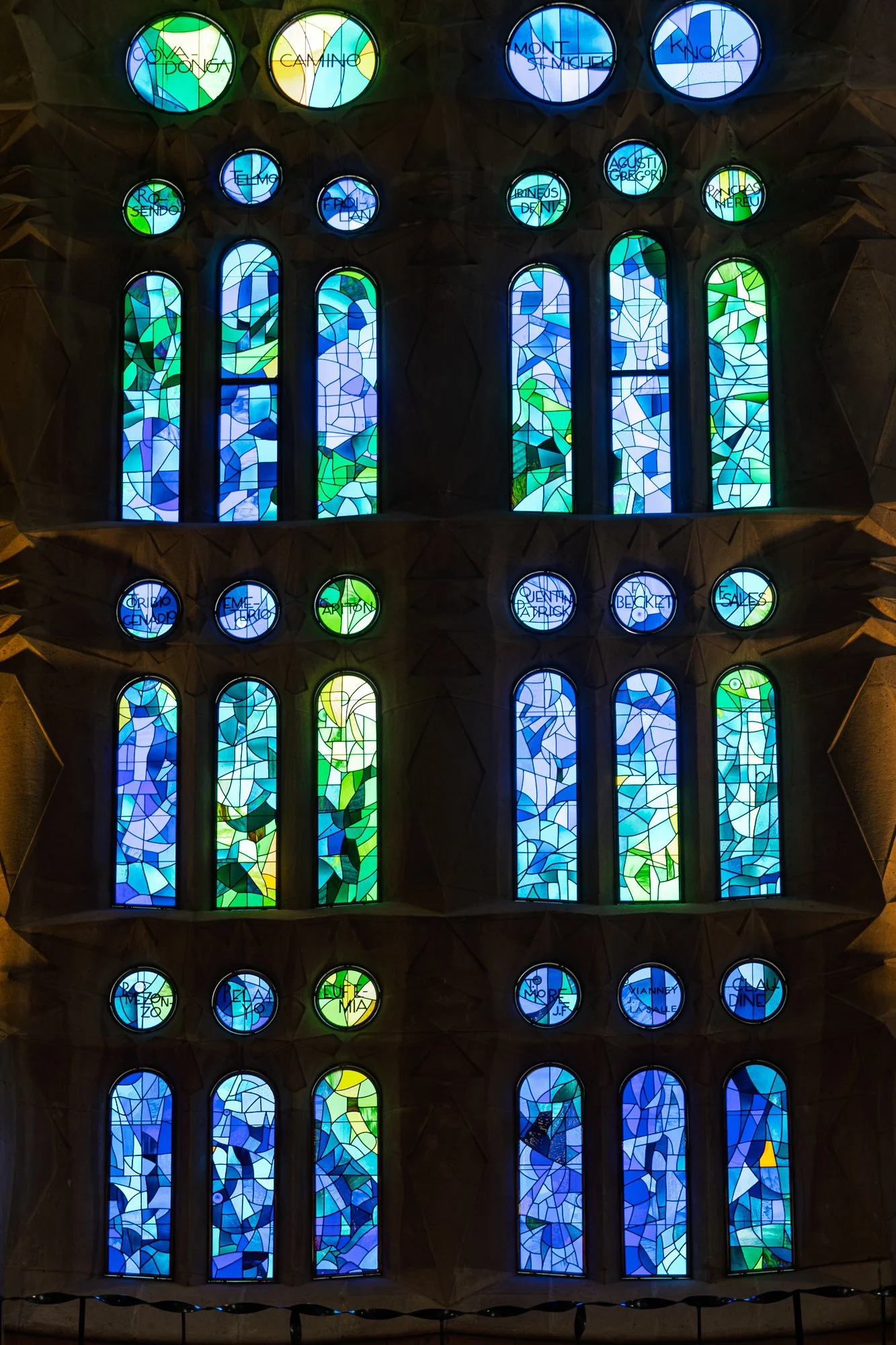
The cool side of the nave — bCLPhoto
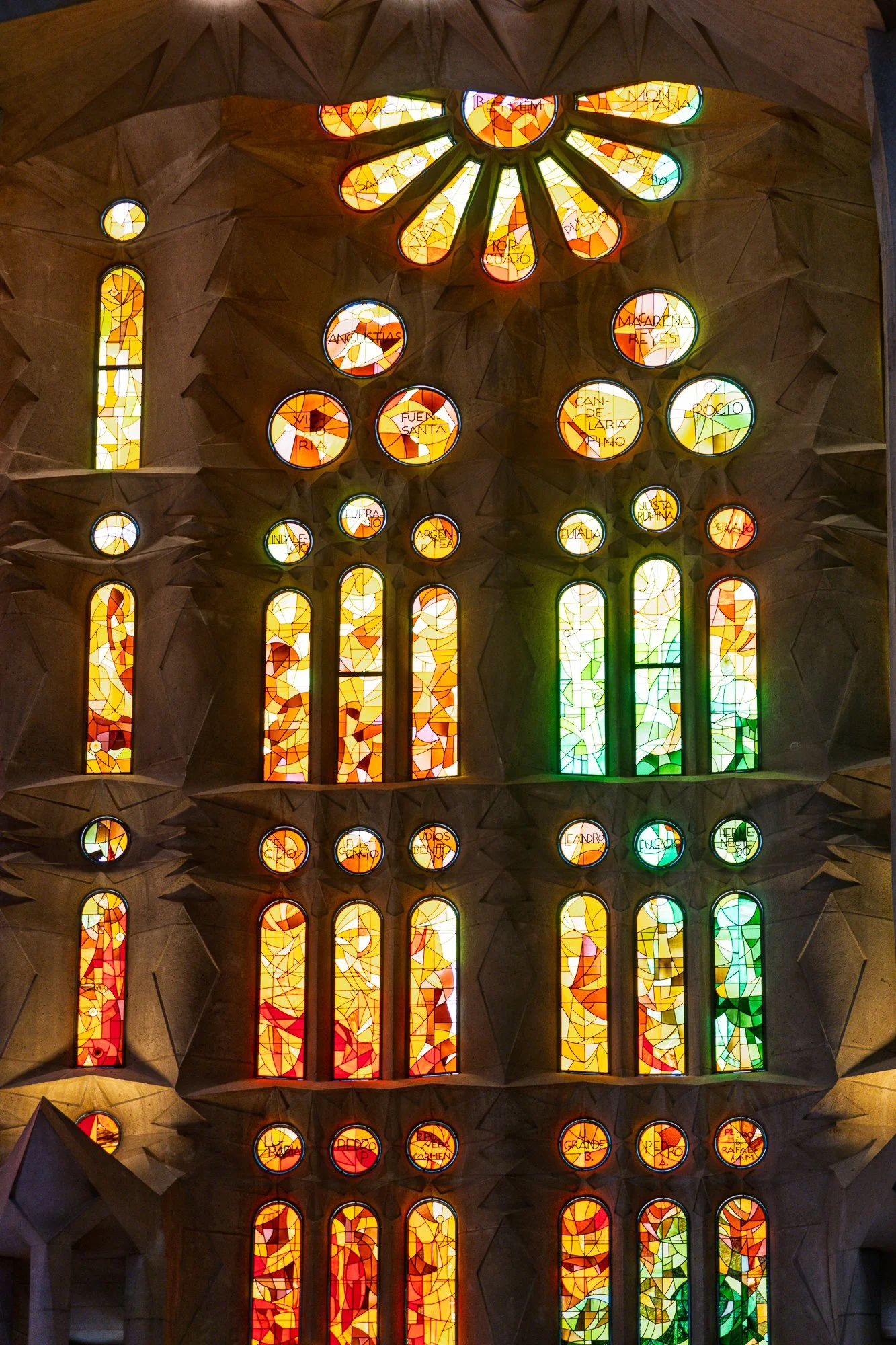
Every window carries a name — bCLPhoto
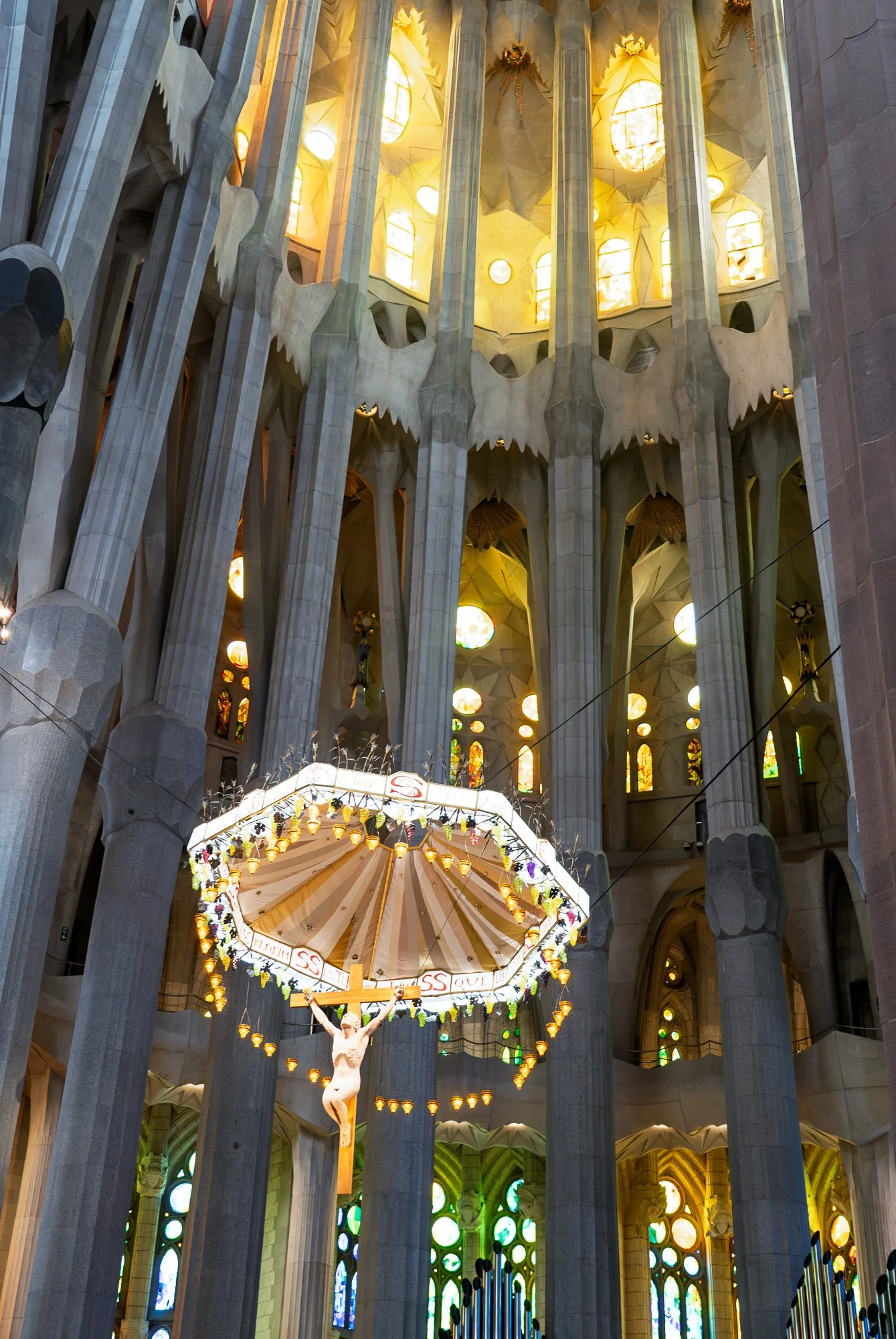
The canopy over the altar — bCLPhoto
Light Through Stone: Photographing at 2pm With the Sony a7R IV
Shooting inside a working basilica with hundreds of visitors moving through it is a different discipline from working the street, but the instinct is the same: read the light, find the frame, wait for the moment it comes together. I switched constantly between the 24-105mm for the wide, upward shots that show how the columns open into branches, and the 70-200mm to isolate single windows or compress a row of columns into a tighter, more graphic composition.
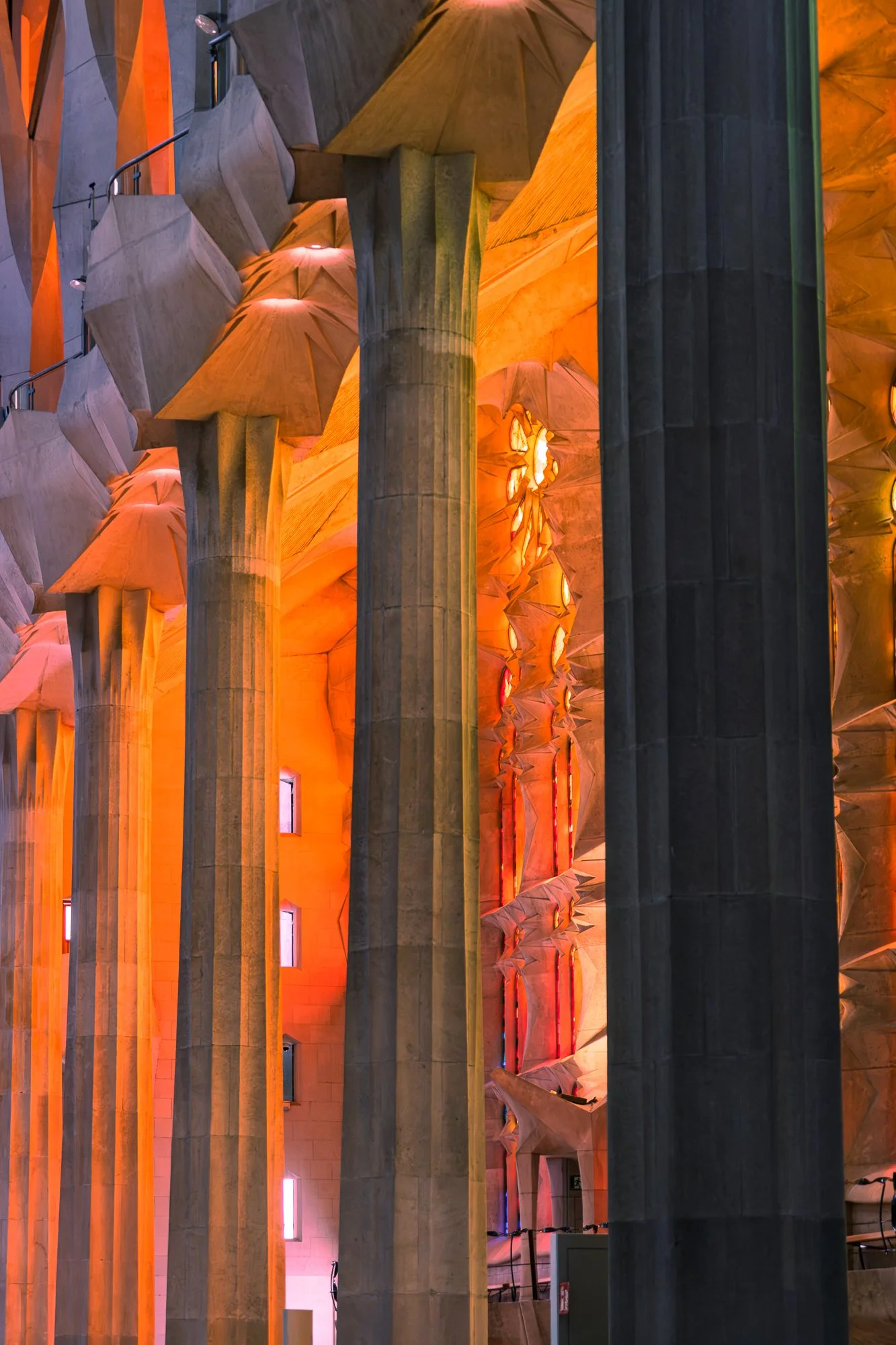
Columns in a row, 70–200mm — bCLPhoto
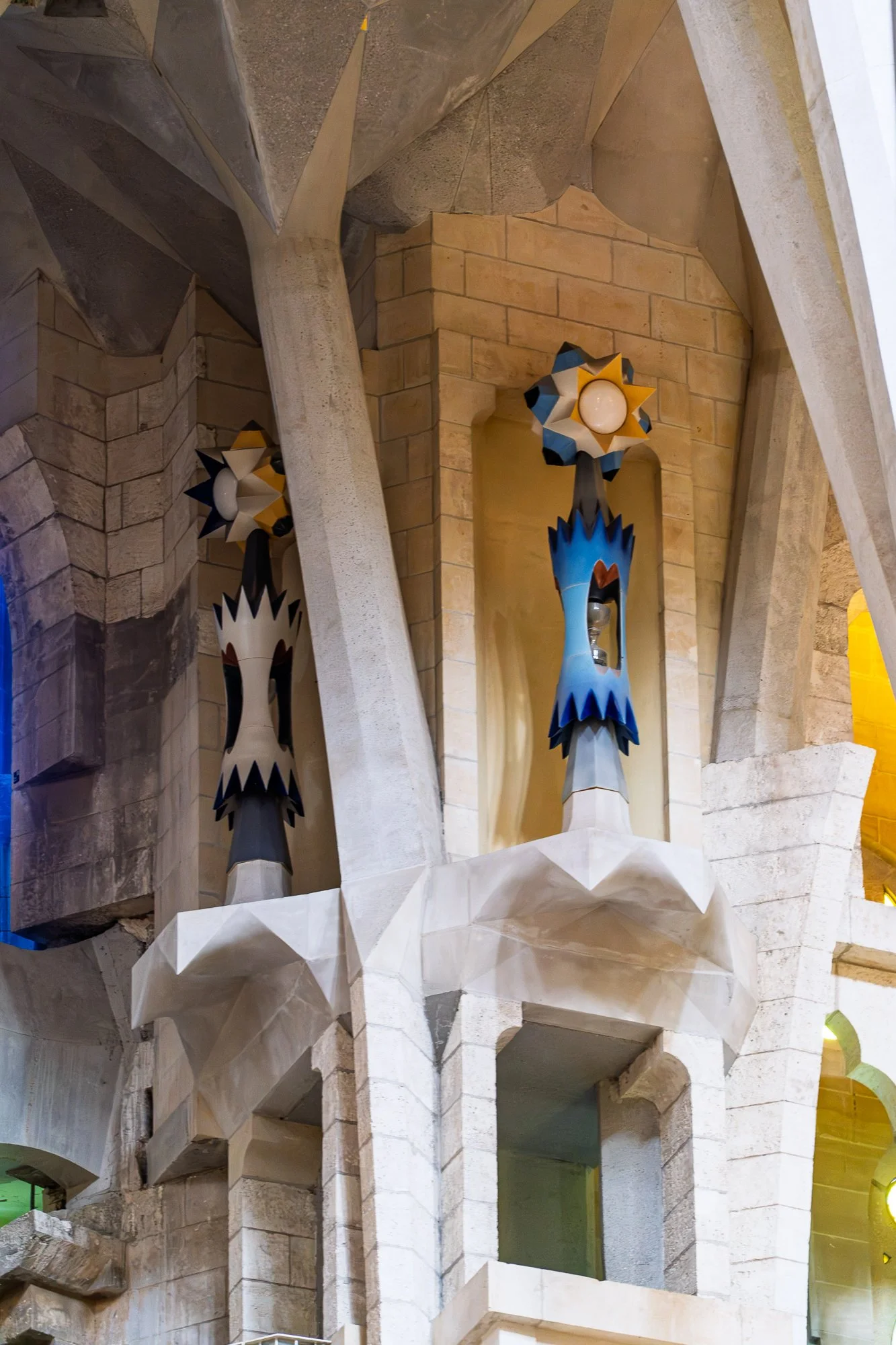
A detail easy to miss — bCLPhoto
A tripod would have made the low-light shots considerably easier — some of these frames were shot handheld at 1/60s, which doesn't leave much margin — but tripods aren't allowed inside without a special permit, so handheld was the only option anyway. The Sony a7R IV held up well through the session, staying clean up to ISO 2000 even in the darker side chapels. Around me, the space had a particular hush to it: quiet conversations in half a dozen languages, footsteps on stone, the occasional gasp from someone looking up for the first time. Nobody was in a hurry, and for two hours, neither was I.
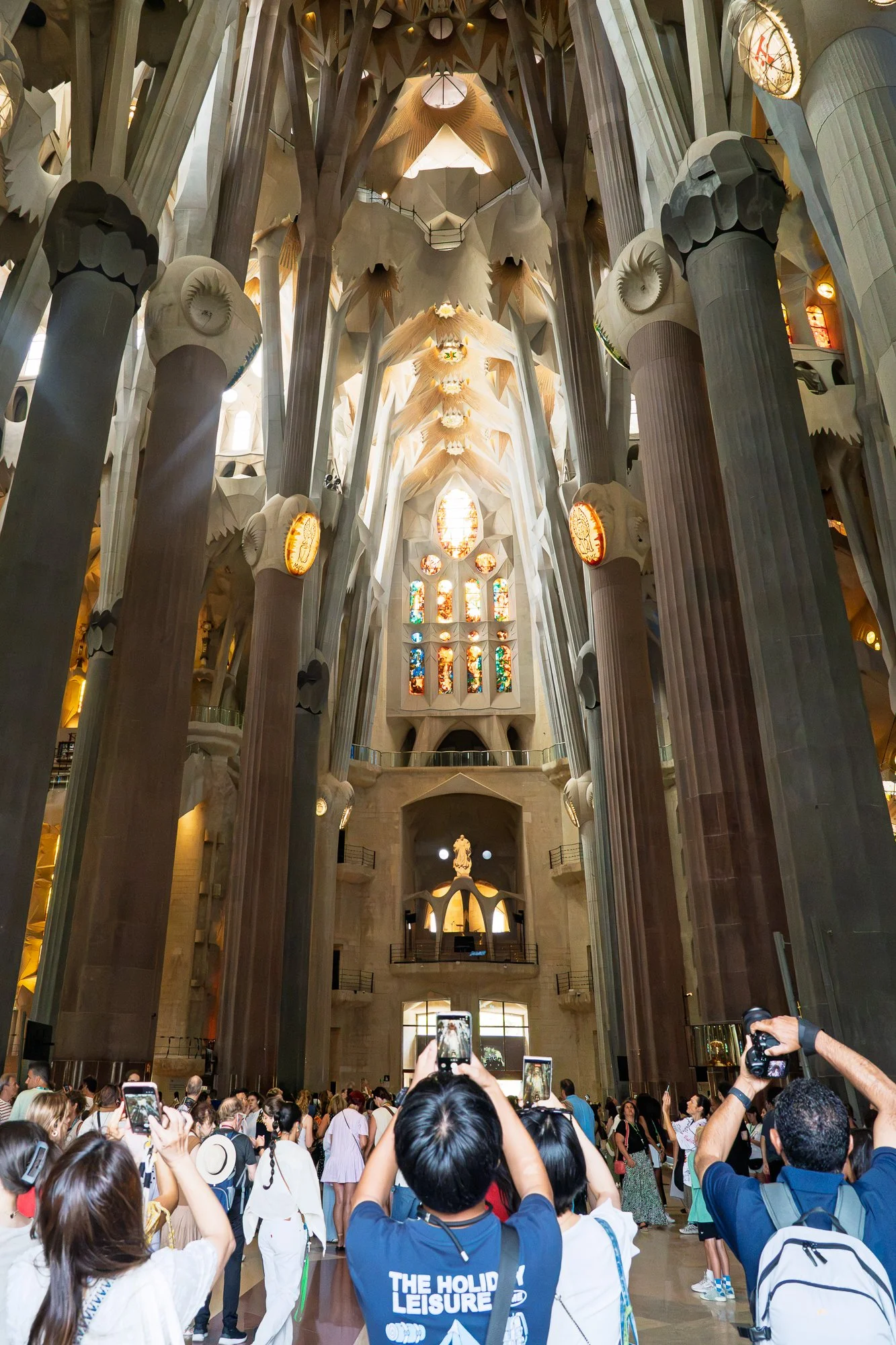
Nobody was in a hurry — bCLPhoto
Sagrada Família Photography: Practical Notes for Visitors
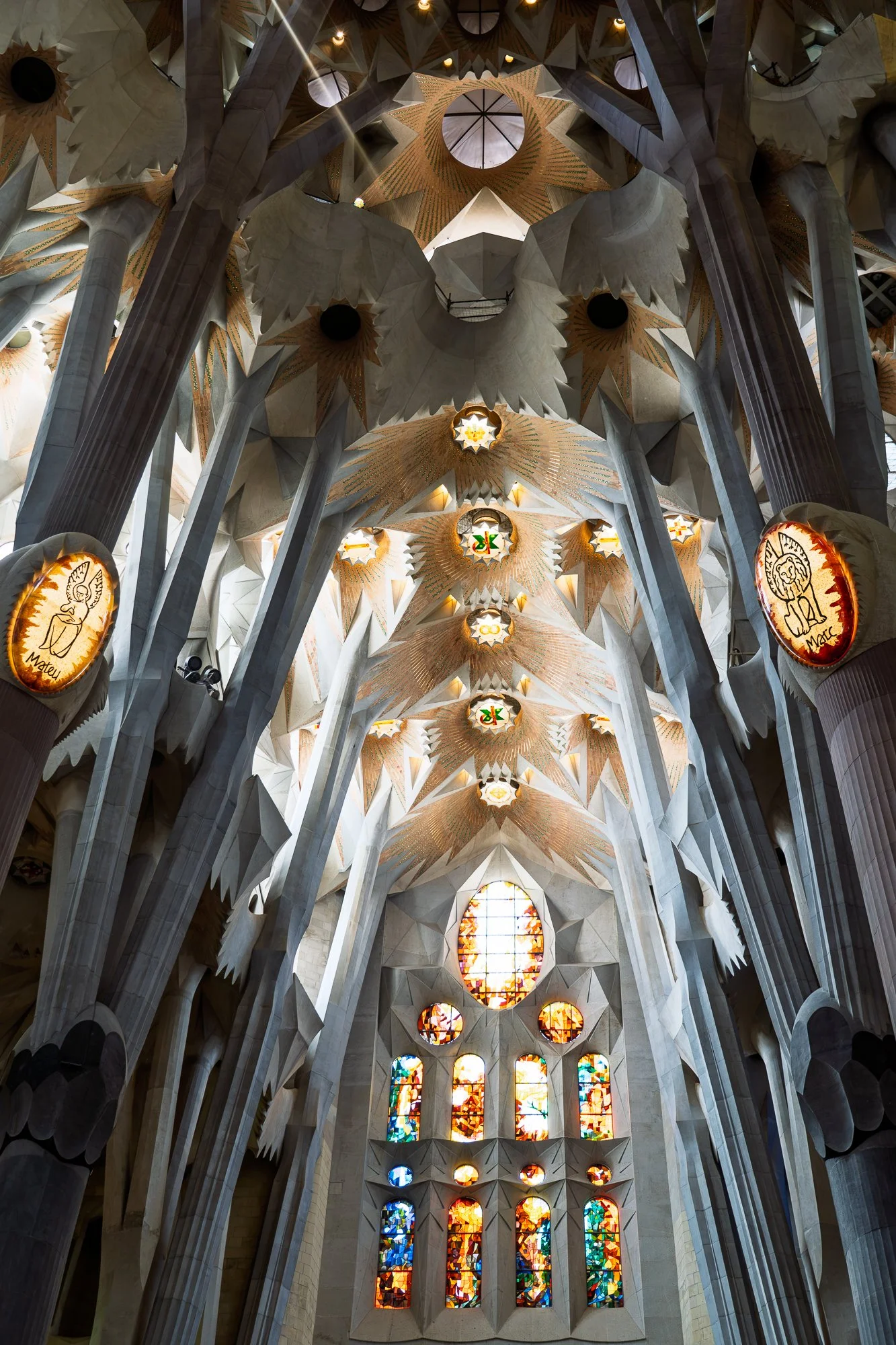
Looking straight up — bCLPhoto
If you're planning your own session, book your tickets online in advance — same-day entry is rarely available, and turning up without a reservation is the surest way to leave disappointed. Give yourself at least two hours, and if photography is the priority, a full morning or afternoon is not too much: the light changes enough throughout the day that returning at a different hour would produce a completely different set of photographs. Early afternoon worked well for me, with both sets of stained glass windows active at once, though I'd be curious to see how the interior looks at opening time, before the crowds and with softer morning light.
This is really what makes Sagrada Família photography worth the extra planning: it rewards patience with light more than almost anywhere else I've shot in this city. Gear-wise, versatility mattered more than any single lens — a wide zoom for the architecture, a longer one for detail and compression. Leave the tripod at home unless you've arranged a special permit in advance; regular visitors aren't allowed to use one inside. Beyond that, the building does most of the work. You just have to be ready when the light finds its column.
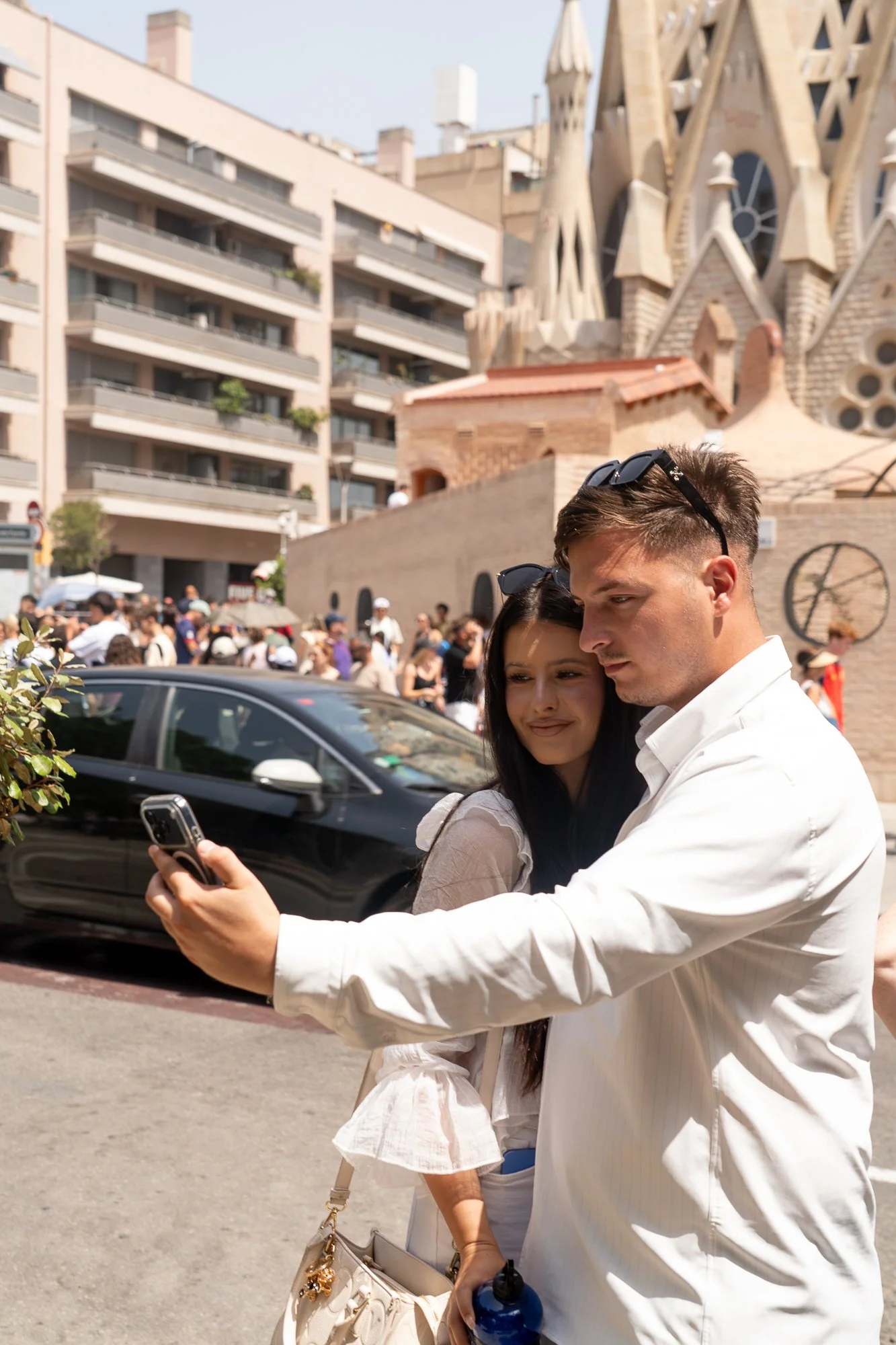
Everyone wants their own photo here — bCLPhoto
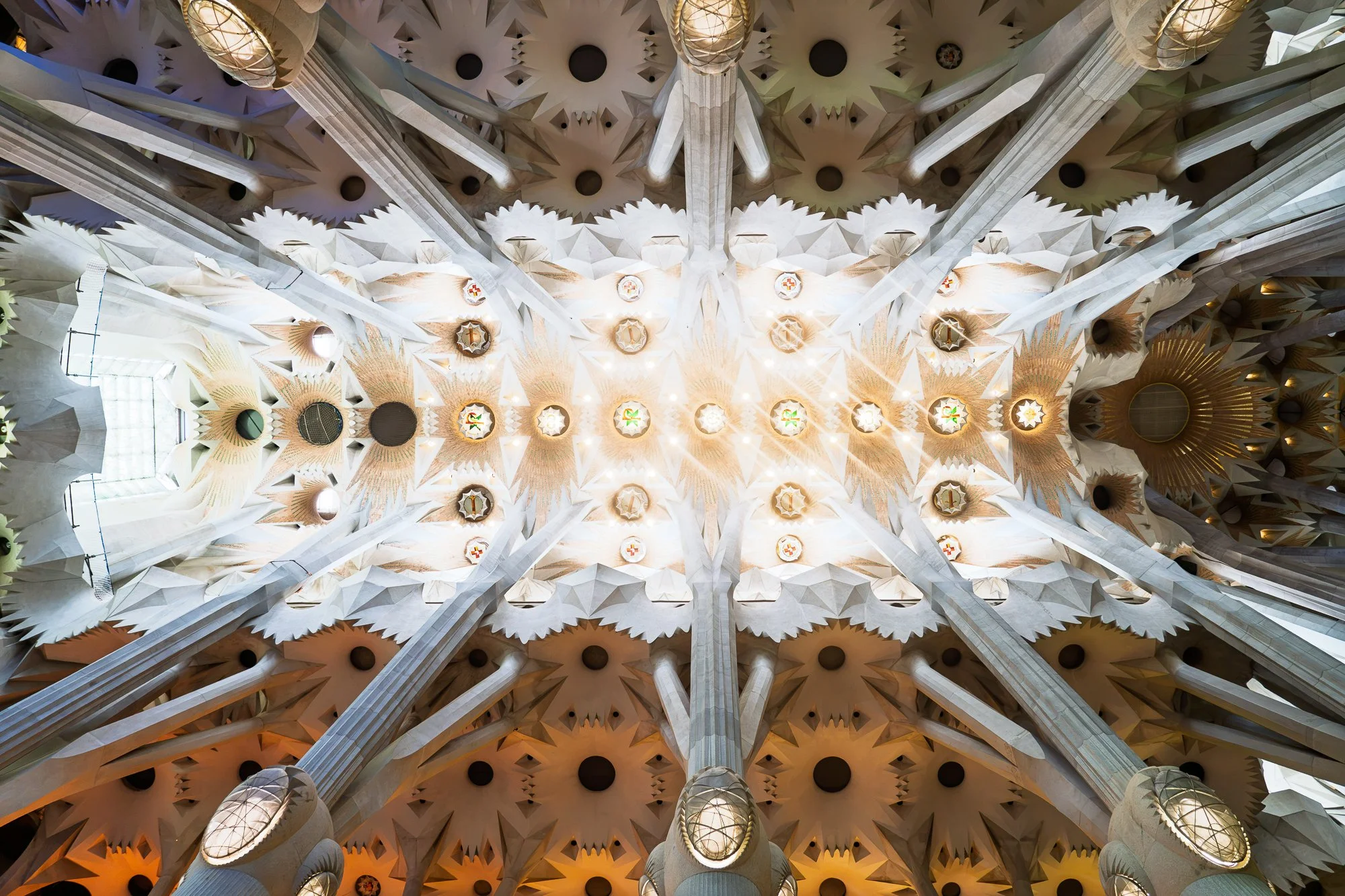
One last look up — bCLPhoto
If you find yourself in Barcelona, set aside half a day, book ahead, and let Gaudí's forest of color surprise you the way it surprised me.
Photos: Sony a7R IV · 24–105mm & 70–200mm · 1/60–1/250s · ISO 400–2000
See more urban architecture photography from Barcelona in the portfolio.
Want one of these on your wall?
Every photo on this site can be printed — archival paper, signed and numbered. Browse prints →